Beyond “Add-Ons”: How Specialist Collaboration Strengthens Early Childhood PBL
Collaboration is the foundation of the emergent curriculum at Lowell School in Washington, D.C. I am currently the Pre-Primary School (ages 2.5-5) STEAM teacher. My main focus is to ignite and fan the flame of curiosity, and Project Based Learning gives me the platform to do just that. Specialty classes at Lowell School are not “add-ons”; they are a continuation of the core curriculum. By following children’s passions and questions, students in our program dive deeply into topics and see themselves as scientists, technologists, engineers, artists, and mathematicians.
Our child-centered STEAM program requires close observation, purposeful conversations, and careful listening to determine what children are interested in. We start by asking the children to think about the topic we are beginning, asking them, “What do you think? What do you already know?” These simple questions creates a child-centered conversation and lets them know that what they have to say is important. The team brings this documentation together to discuss how we can create engaging learning experiences.
Opportunities for Collaboration
Building in opportunities for this collaboration with classroom teachers is essential. I have weekly, ten-minute meetings with each teaching team to reflect on lessons and plan a path forward. Although these meetings are short, even ten minutes allows us to share ideas and organize upcoming lessons in our calendars. As the projects develop, or if our weekly meeting can’t happen, we have on-the-spot meetings and use email to share ideas. I also share a unit/lesson document with classroom teachers so they can see my documentation and plans. Additionally, teachers share their weekly family newsletter with me. This snapshot of their classroom helps me make STEAM connections that will be meaningful to the classroom community. For example, I read that a class was starting to work with patterns, so in STEAM class, we created patterns using polar bears and penguins, the topic at the time. Each of these systems helps me stay responsive to children’s interests and teachers’ needs.
In-Class Collaboration
At our school, classroom teachers stay with their group during the once-a-week, 45-minute STEAM classes. Teachers arrive with the group, knowing how the day has been going and in tune with the group's dynamics. They know who has been working with big emotions that morning, who has been extra quiet that day, or whether a student is very excited about leaving early for a trip. Teachers support children during my lessons, and I have a fresh pair of eyes. Since the children have their support system with them, they can focus their attention on learning. The teachers get to see firsthand what lessons the children are engaged in. Because we share the experience, our collaboration can move quickly into next steps.
STEAM PBL Unit: Our Weather Project
My own projects typically emerge from teachers’ observations of student interests. In this case, classroom teachers noticed that children were engaged in weather-related pretend play on the playground. Children were building barriers to block tsunami waves, hiding from tornadoes, and running from storms.
When the children came to STEAM class, I asked them to tell me more about the weather. The children excitedly shared a wide variety of information with me. They talked about the weather on other planets and shared facts they had learned. They shared things like “Tornadoes are as fast as a high-speed train and can have hail”, “It (tornadoes) gets a lot of air in it, big and tall,” “Sometimes tornadoes are windy and spin really fast and blow houses. Hurricanes knock down houses, tornadoes pick them up, and hurricanes knock them down.” Several children asked, “What is weather?” At our next class meeting, the children used books and posters to conduct research about the weather. They especially focused on wind, cold, sunny, rain, snow, storms, fog, clouds, tornadoes, hurricanes, and tsunamis. They also noted that the weather can affect what activities we can do outside, like having a day to play in the sand; it needs to be warm.
We had a big snowstorm during the unit, and I asked the children how they knew the storm was coming. They said their parents saw it on their phones, computers, and Alexa. The children had never seen a weather forecast, so we watched one in STEAM class. Children were interested in tracking the weather to help people be ready for it. The result was a PBL unit that spanned six months, with a driving question: How can we help everyone be ready for the weather? Our final product was a taped weather forecast shared with families and students at Lowell School.
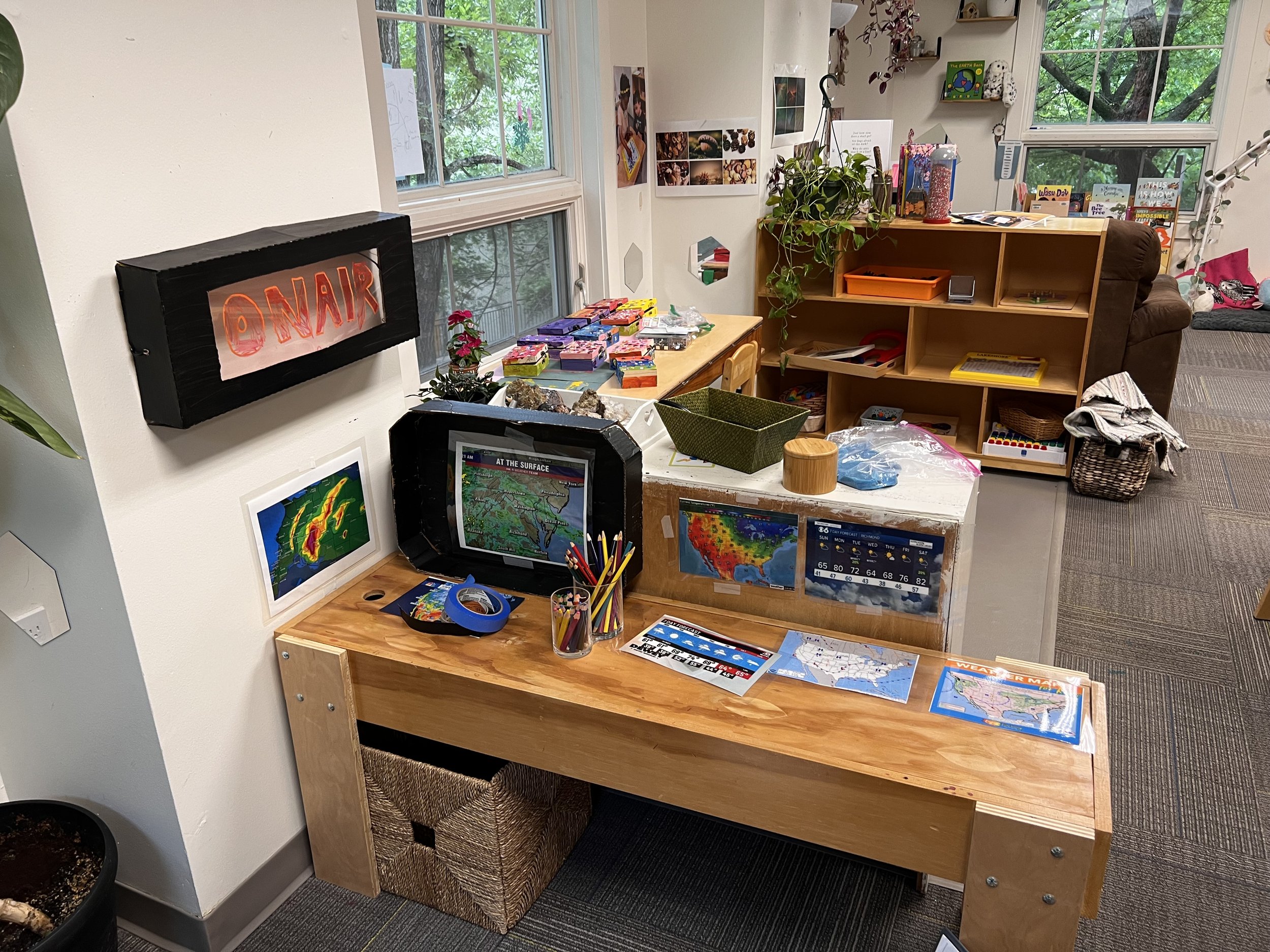
A weather research center
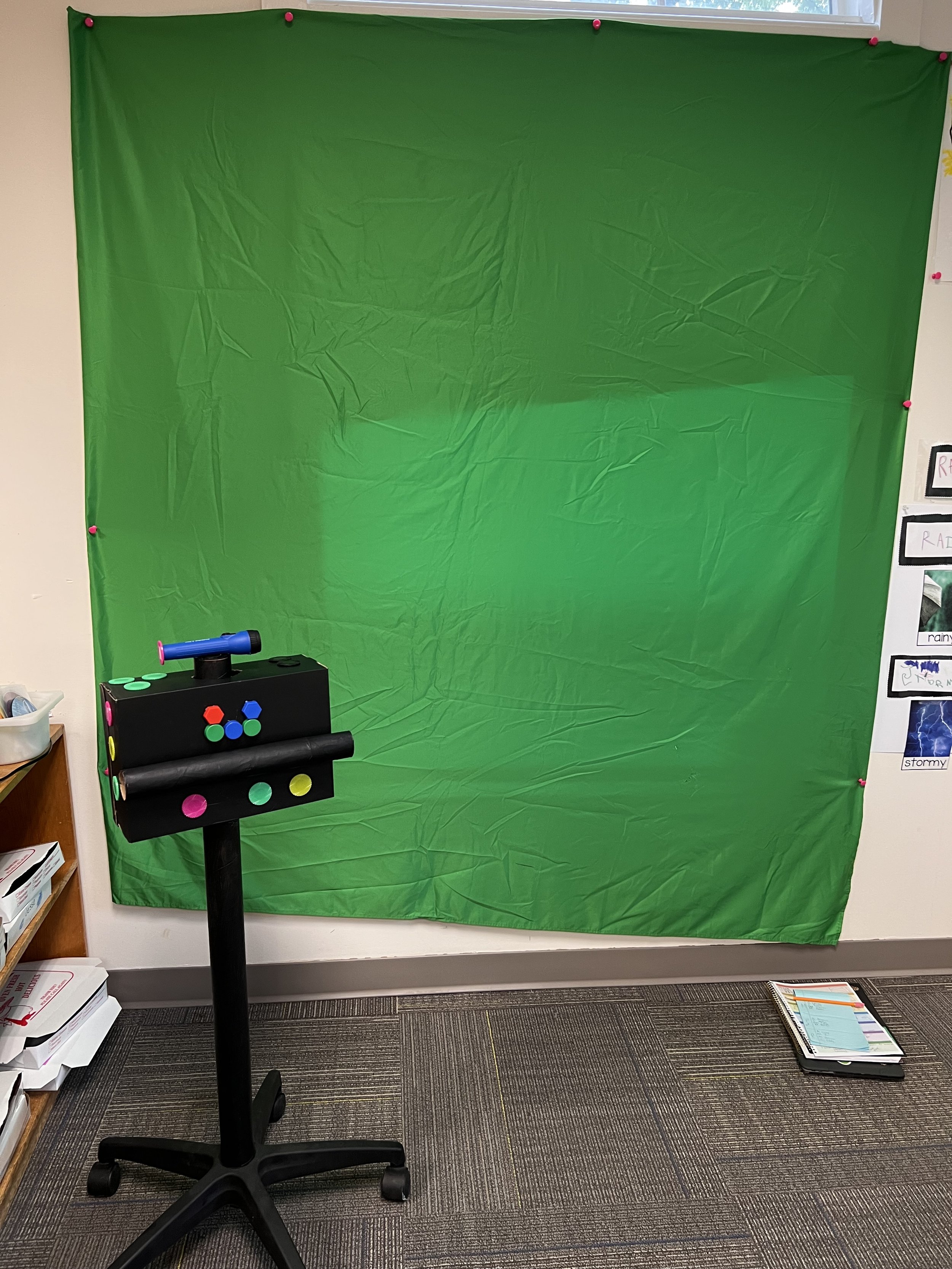
Camera and green screen
Interdisciplinary Learning Goals
Weather was a consistent topic in both STEAM and regular instructional time, so students’ interest and focus remained high. The classroom teachers and I worked closely to decide where the PBL learning goals would be explored. For example, the classroom teachers established a daily weather reporter job and coordinated the transformation of their pretend play area to a weather station. This supported the learning goals related to presentation skills.
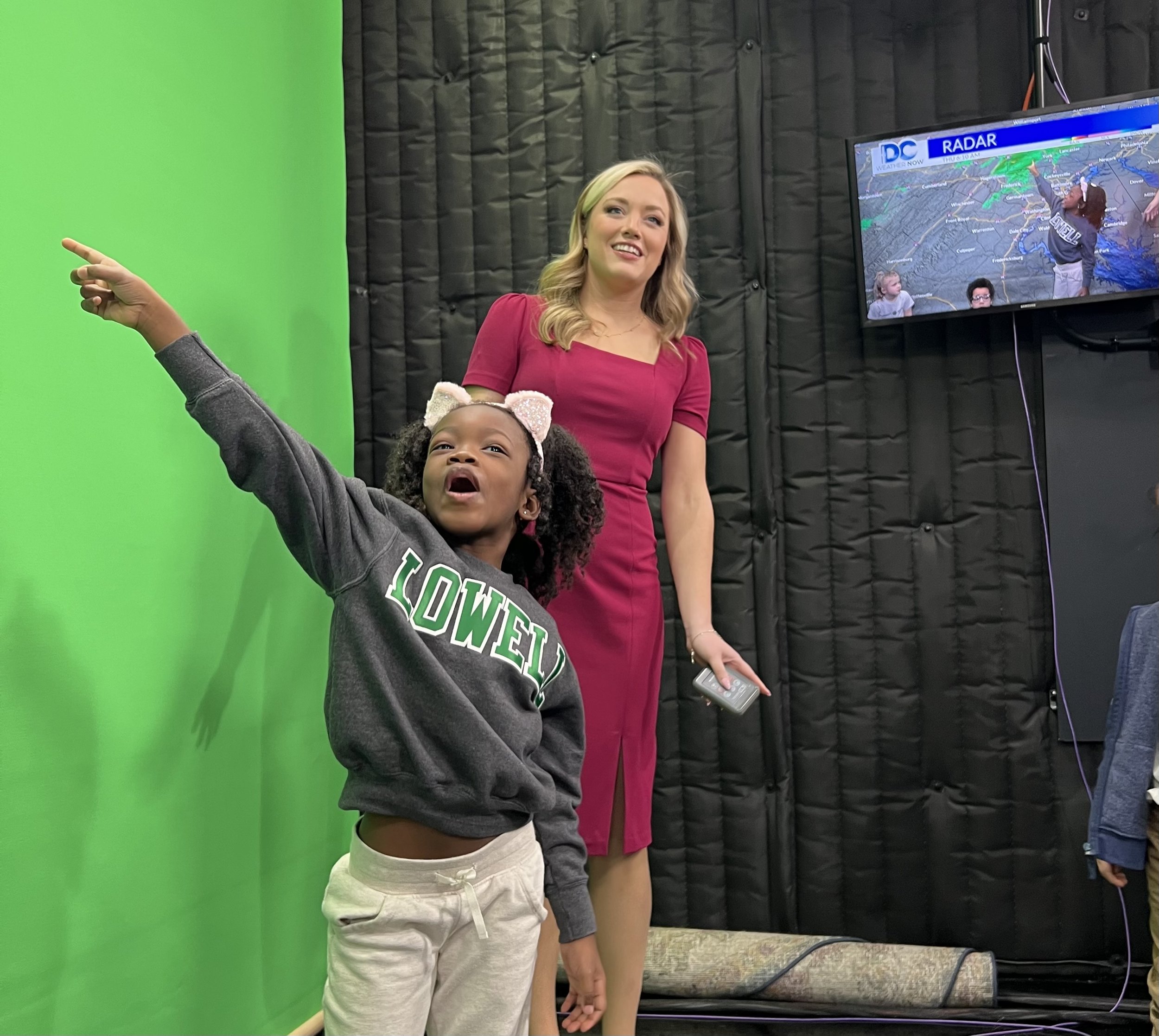
In STEAM class, I covered learning goals focused on helping children develop a basic understanding of the weather. For example, we did extensive work on the water cycle. They pretended to be water as it worked through the cycle, evaporating, condensing, and then falling to the Earth as precipitation. I also coordinated the field trip to speak with a meteorologist and see the tools they use to track the weather. This field trip was a key moment for the group. The children were impressed by the meteorologist we talked to. She showed us her tracking equipment, the green screen, and how she delivered the forecast. She also told the group how impressed she was with our questions and knowledge. This really energized and inspired the group to complete our work for this project. After the trip, the class decided to incorporate a green screen effect into their forecast production. Students also decided to add TV cameras, weather computers, and a snack station to their classroom weather station. Our end product of a weather forecast was truly a collaboration between the classroom teachers and me.
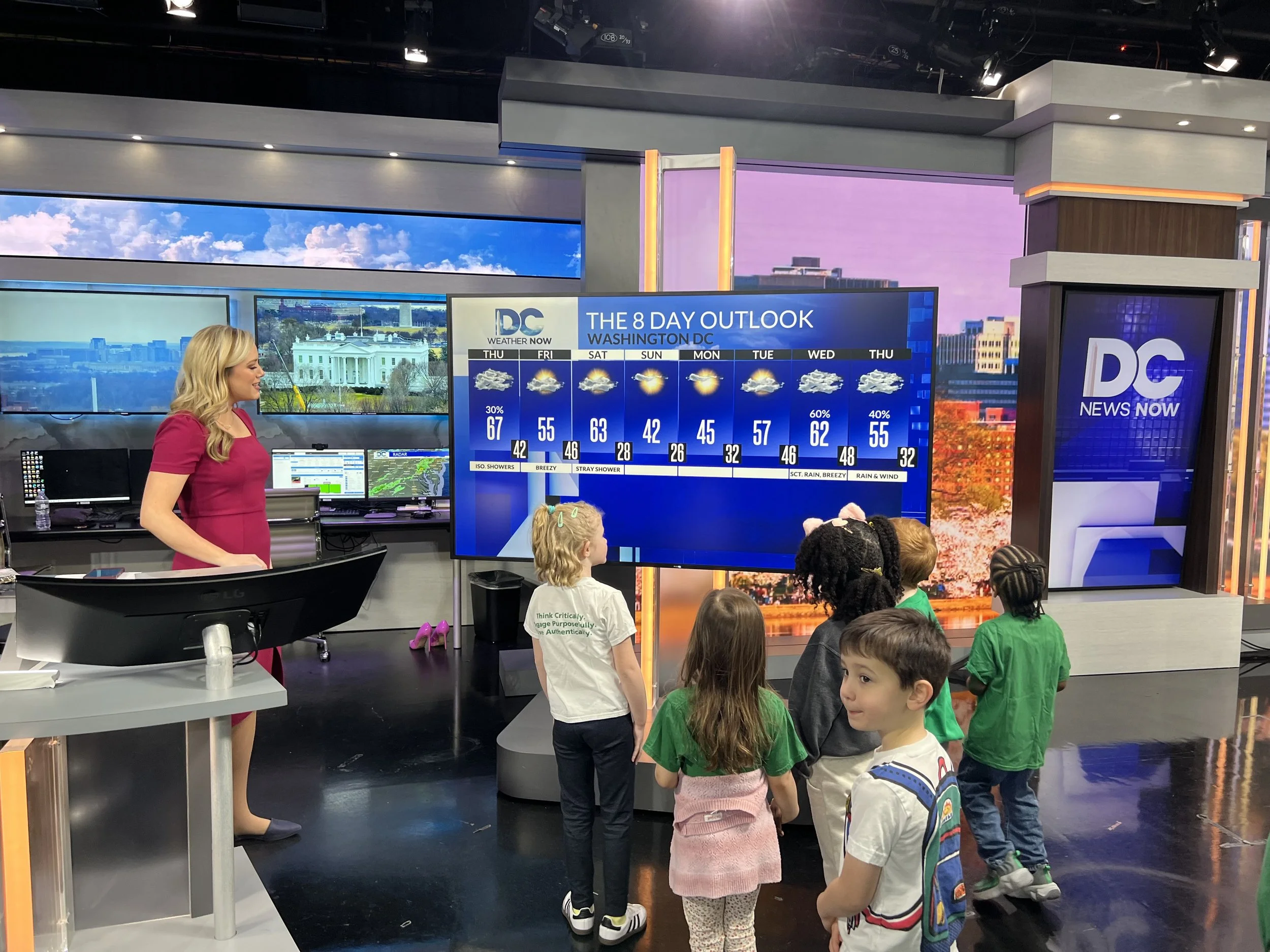
Our class visits Jackie Layer, the meteorologist from DC News Now
Supporting PBL Across Classrooms
I am currently contributing to the PBL units in all five of our classrooms:
Discovery Room (2½–3 year olds): Music and Sound
The Discovery Room, our youngest group, showed a strong interest in music. The classroom teachers developed a PBL unit with the driving question,
How can we create a band to play music for our families? When the teachers told me about the project, they had the idea to have the children explore sound vibrations in STEAM class. During lab visits, students used their hands and various mallets to strike drums, containers, and furniture to explore hearing and feeling sound vibrations. They took off their shoes to feel the vibrations through their feet while standing on large sheets of cardboard as music played and vibrating tuning forks were placed on metal lids to create a satisfying buzzing sound.Explorers (3–4 year olds): Germs and Health
The children in the Explorers class had previously learned about germs and had made a classroom hand-washing sign. They wanted to share this learning with the entire Pre-Primary School community. The driving question for this project was, How can we keep ourselves healthy and safe at school? In STEAM class, children investigated pictures and videos of germs, noticing shapes and movement. They drew their own pictures of germs and described them. They also participated in a demonstration of how germs spread and shared why it is important to wash their hands properly.Navigators (3–4 year olds): Feelings and Color
The children in the Navigators classroom were looking for ways to explore their feelings. The teachers established the driving question, How can we make a book all about our feelings using colors? In STEAM class, I helped children predict and observe changes when mixing colors. The children in this group enjoyed experiments and being scientists as they created chemical reactions using baking soda and vinegar, and added paint to mix their own colors. After the experiments, they shared how the colors made them feel.Adventurers (4–5 year olds): Mapping
The Adventurers noticed visitors in Pre-Primary and wondered, How can we make a map to help visitors know where they go when they come to Pre-Primary? This driving question was supported in STEAM class in two ways. The first learning goal focused on communicating location and directions. Children chose a location and drew a map of it. Some created maps of their homes, others maps of butterfly migration or family beach trips. They also worked with me to add map keys. Children practiced directional language by using maps to go on treasure hunts, turning right or left, moving forward or backward, and looking under or on objects to find the treasure.Voyagers (4–5 year olds): Constellations and Stories
The Voyagers asked, How can we teach people about the first people on our land? In STEAM class, students were very interested in space, so we connected this to Indigenous people’s constellation stories. After discussing constellations, children were given a picture of a starry sky. They drew their own constellations and created constellation stories. The group also named a star for our school, “Sparkling Loved Star”. We shared these constellation stories and our star name with the Head of Lowell School and our Pre-Primary School Director.
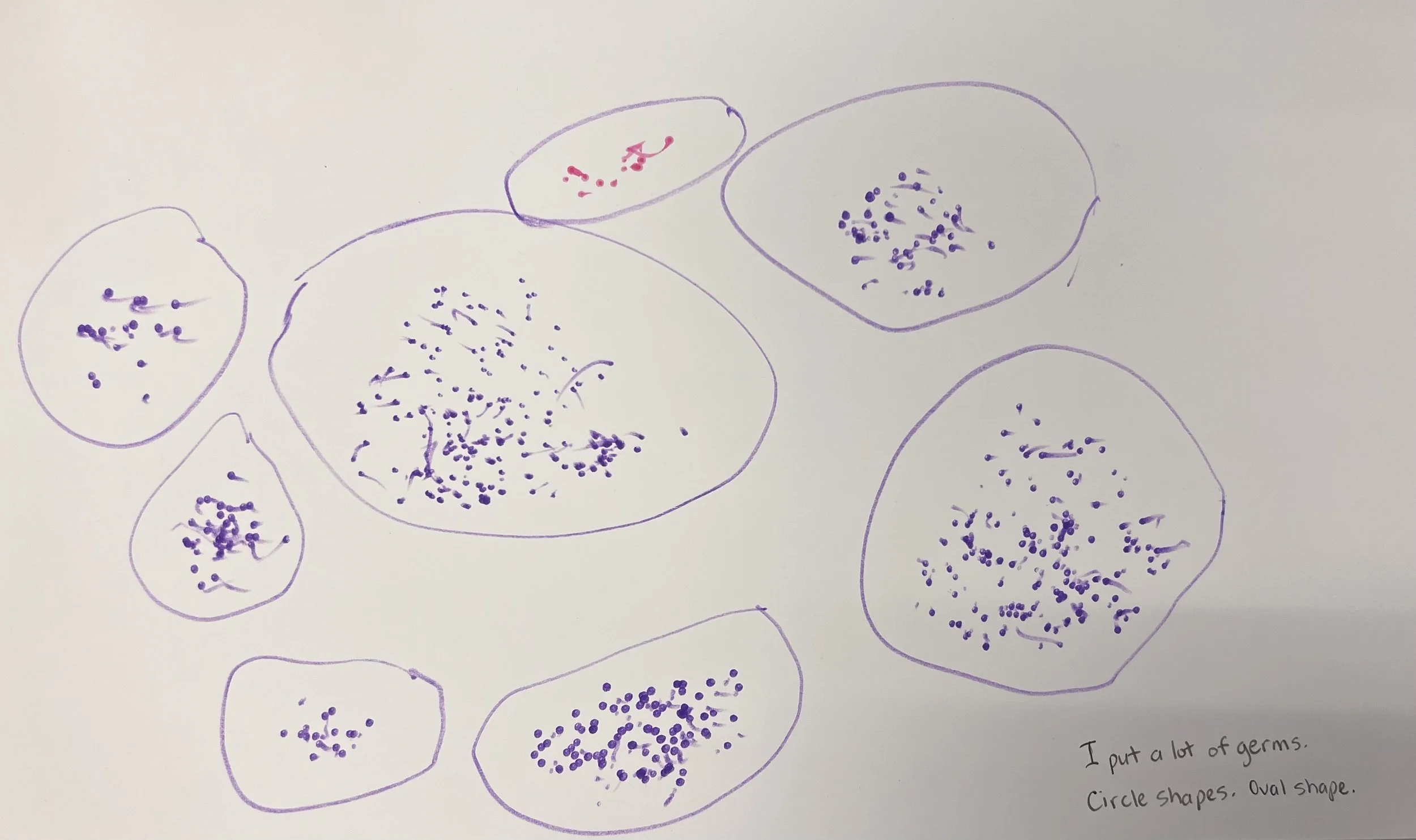
In the Explorers Classroom, children used the information they learned from closely looking at photos and videos of germs to draw their own germs. Children noted the shapes they used and, in some cases, the illness the germs caused.
Across these projects, collaboration takes shape in both the small, everyday moments between teachers and specialists and in the intentional time we make to plan and connect. Over time, a few practices have helped us build and sustain that work in meaningful ways.
Keys to Specialist Collaboration
Look for Connections
As a specialist, finding a connection in a classroom PBL is key. When the teachers in the Voyagers room brought information about the Pleiades Constellation and the class’s interest in longhouses and wigwams, I viewed both through a STEAM lens. My science lens showed us creating our own constellations. My engineering lens showed us using our engineering skills to build models of those homes. Looking to make your own connections? Talk to the teachers, study their project walls, and most importantly, talk to the children. If children see their project topic throughout their day, it encourages a deep dive into the learning.
Excitement is contagious
When teachers are excited, it fuels collaboration. We make it work because we believe in the program and love seeing the results: children deeply engaged in learning, asking questions, and growing at their own pace.
Meet regularly
The key to keeping collaboration manageable and sustainable is doing our utmost to meet weekly and being flexible when we can’t. Having short weekly meetings complements our emergent curriculum since the flow of the work is dictated by the children.
Stay Curious
The PBL unit isn’t my project, or the classroom teachers' project. It belongs to the children. With that mindset, all of the contributors work to build a learning experience. Ask yourself key questions to guide the process: How might I contribute to or begin a unit? Is there something I can do to help a classroom? How can they help me?
Be flexible
Things always come up during the school day, especially with young children. Working closely with classroom teachers establishes a team that can work together when project planning gets derailed.
Georjean Rossow earned a B.S. in Education from Eastern Michigan University and began her career as a 5th-grade teacher, later serving as an Instructional Supervisor (K–6). She eventually transitioned to early childhood education, working as an Assistant Director at a preschool, where she developed a deep passion for this age group. After several years at home with her son, she returned to Lowell School as a volunteer and guest teacher, and later joined the Pre-Primary School as the STEAM teacher following the COVID shutdowns. She is now in her fourth year in that role.